
Unibet from Guyana: host match, licence record and KYC evidence file
An identity-document mismatch is where most held balances begin, not in the cashier and not in the small print. A middle name typed at sign-up but missing from the passport, a household bill in a landlord's name, a bank card embossed with a single initial: any of those gives a verification reviewer reason to pause a payout while the file is read again. Unibet is assessed from that desk, with one question in front of it. Do the address, the company behind it and the name on your papers agree closely enough to clear a review opened from Guyana?

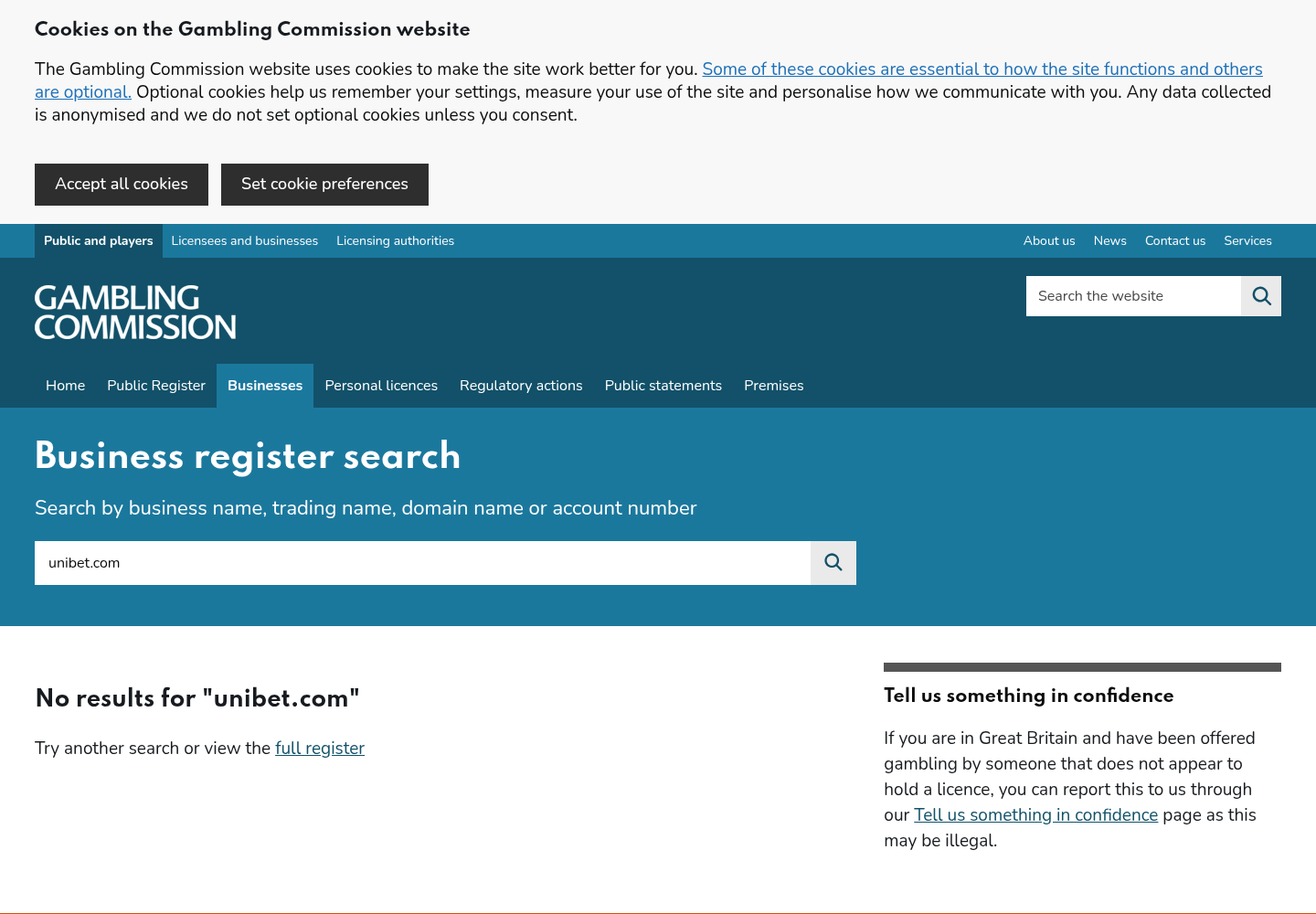
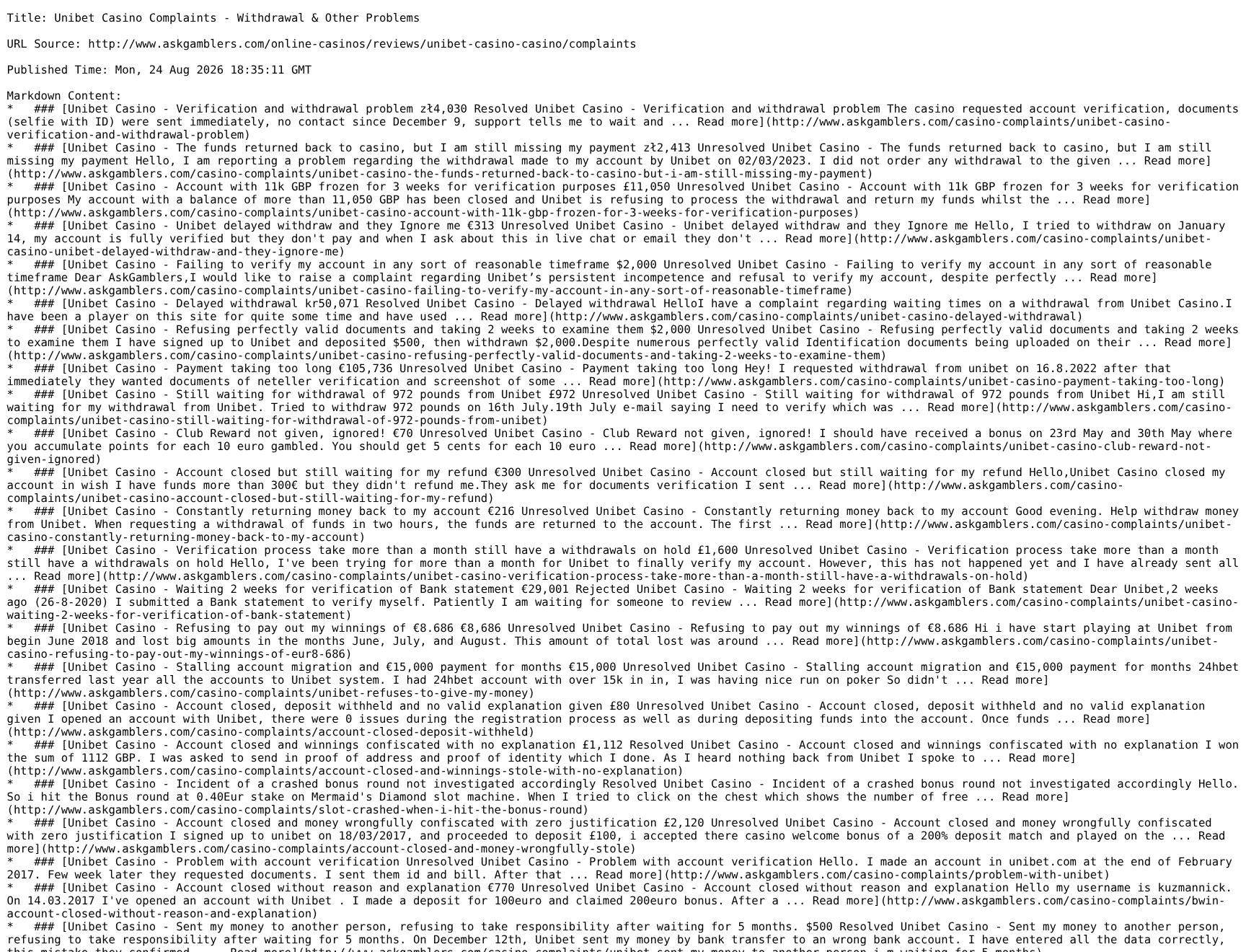
Two captures anchor what follows: a public business-register search run against the exact address, and a reader capture of an independent complaint index. Both were taken on 24 August 2026. Neither answers the question a player in Georgetown or New Amsterdam actually asks, which is whether a remote account is authorised for use in Guyana, so the file stays marked open on that point and the rating stays amber.
A document mismatch is where held balances usually start
Verification teams work from a three-way match: the name registered on the account, the name printed on the identity document, and the name attached to the money used to fund it. When all three agree character for character, a withdrawal request is a queue position. When one differs, it becomes a case file, and case files move at the speed of email.
Guyanese paperwork creates predictable friction. Identification cards often carry two or three given names in full while a bank card shows a single initial. A married name may appear on some records and not on others. Proof of address is frequently a shared bill in a parent's or landlord's name, the document type reviewers reject most often. None of that implies bad faith on either side, but it is the difference between a short wait and a three-week exchange of messages.
The cheap fix is order of operations: settle spelling and address details before the first deposit, never after the first win.
Matching the exact address to a register entry
The canonical address in our file is unibet.com. App listings, mirrors and shortened links passed around in messages were treated as unverified until they resolve to it.
The register work was a search of the UK Gambling Commission public business register against that address, read on 24 August 2026: business-register search for the address. It returns a Great Britain licensed entity associated with the brand, and our packet records the operator as Platinum Gaming Limited alongside other Unibet group entities. Two narrow things follow: the address is not orphaned, and a named company answers to a British regulator.
Three things do not follow. It does not show that the same company contracts with customers resident in Guyana, that the terms shown to a Guyanese visitor are the ones held under the British licence, or that any Guyanese authorisation exists. Group structures split by market, and the entity named in your own terms is the one that will answer a complaint. No licence expiry date is recorded in our packet, so no claim is made about the current status window. Read the register entry on the day you intend to play rather than trusting a stored figure.
What the Guyanese legal picture settles, and what it leaves open
The statutory backdrop includes the Gambling Prevention (Amendment) Act 2007, which introduced casino premises and casino operator licensing concepts. That is a premises-and-operator framework: it addresses casino operations licensed in Guyana rather than the position of a resident who opens an account with a company established abroad.
Our file holds no Guyanese record naming the operator, no local authorisation, no blocking notice and no published statement about accepting customers resident in Guyana. An absent adverse record is not a clearance, and an absent local licence in one file is not proof that none exists elsewhere.
That is why the rating is amber on open evidence. Green would need current primary evidence tied to this exact address and entity for this market; red would need an official adverse record or corroborated documented harm. Neither is present. Readers weighing their own position can start from our notes on Guyanese gambling law and take local advice where residency status or larger sums are involved.
Account ownership: one person, one name, one file
Ownership disputes end more balances than bonus disputes do. Before money moves, make the account provably yours and only yours.
| Requirement | Why reviewers care | Do this before depositing |
|---|---|---|
| One account per person | Duplicate registrations are a standard closure and forfeiture ground in operator terms | Search your older email addresses for a forgotten sign-up first |
| Registered name matches the identity document | The payout file is compared character by character | Enter every given name exactly as printed, middle names included |
| Address and date of birth current | Stale details trigger a fresh verification round later | Update after any move, well before a withdrawal request |
| Account used only by the holder | A shared login breaks ownership and can void a balance | Never let a relative deposit or place a stake for you |
If a relative already holds an account at the same address, keep the funding instruments completely separate. Shared cards are read as one household user.
Name checks worth running before the first deposit
Our packet does not record which deposit or withdrawal methods appear for customers in Guyana, so nothing below should be read as a list of what your cashier will show. The checks hold regardless of what is offered.
Compare the exact holder name on any instrument you plan to use against your registered name, including the order of given names. Where a card or account shows an initial only, expect to supply the identity document that expands it. Where the account currency differs from Guyana dollars, conversion is handled by your own bank or issuer, and the amount that lands can differ from the amount requested. Withdraw to the instrument you deposited with wherever that option exists, since a route change is the most common trigger for renewed verification. Our payment checks for players in Guyana set out the same sequence in more detail.
Readers who have finished those checks and still choose to continue can use our routed link: See the Guyana play route.
Documents to prepare, and what our file does not confirm
Assemble documents before you need them; a scan taken calmly beats a photograph taken under a payout hold. Our file does not confirm which items the operator requests from accounts opened in Guyana, so the right-hand column stays honest about that.
| Document type | What a reviewer compares | Status in our file |
|---|---|---|
| Photo identity: passport, national identification card or driver's licence | Full name, date of birth, expiry date | Requirement not confirmed |
| Proof of address: recent bill or bank statement | Name and address against the account record | Requirement not confirmed |
| Payment-instrument proof | Holder name against the registered name | Requirement not confirmed |
| Source-of-funds material | Deposit pattern against declared circumstances | Requirement not confirmed |
Prepare each item as a full, uncropped image with all four corners visible and the expiry date legible.
Assembling a complaint packet that survives a second reader
Submissions in public indexes are allegations until a competent body decides otherwise. The independent complaint index captured for our file shows submissions and their public status, which is contextual weight rather than proof of wrongdoing by anyone.
A packet that survives a second reader follows the operator's own escalation path first, then the dispute route named in the terms, and only then a regulator. Keep every stage in one file, in order.
| Item | Format | Note |
|---|---|---|
| Account reference and registered name | Text, exactly as held | Mismatched spelling here restarts the argument |
| Dated timeline of events | One line per event, local time and time zone stated | Gaps invite a request for resubmission |
| Chat and email transcripts | Full text export, not cropped images | Cropping is read as selective |
| Withdrawal and verification screenshots | Untrimmed, timestamp visible | Keep the original files, not re-photographed screens |
| Copy of the clause relied on | Copied text with the date accessed | Terms change; a dated copy protects you |
Our complaint route for Guyanese players lists the order of escalation and the wording that keeps a case moving.
Clone addresses, look-alike apps and search-result traps
Look-alike pages target brand searches rather than direct visitors, and a stored brand mark or favicon proves nothing about who runs a page. Four checks take under a minute.
| Check | How | Fail signal |
|---|---|---|
| Address in the bar | Read it fully after every redirect; the canonical form is unibet.com | Added words, hyphens or an unusual ending |
| Certificate holder | Open the padlock and read the issued-to name | A holder unrelated to the named group |
| App publisher | Compare the store publisher against the company named in your terms | Unknown publisher or a freshly created listing |
| Link origin | Type the address instead of following links from messages or adverts | Shortened links, or promises you cannot find on the address itself |
A page that fails any of these should not receive documents, let alone a deposit.
Continue through the checked route
Privacy limits once your documents leave your hands
Handing over a passport scan is the least reversible step of an account opening. Upload documents only through the operator's own form inside a logged-in session, never as an email attachment and never through a chat widget on a page reached from an advert. Note what you sent and when, because that log becomes your evidence if the file is later said to be incomplete.
Ask in writing which company controls the data and how a deletion request is made. Group structures mean the answer may not be the entity named on the licence record you read. Our packet contains no data-protection assessment of the operator, so no assurance is offered about retention periods or transfers. Where gambling itself has become the risk, our responsible play resources and urgent help contacts come before any payout question, and our privacy notes explain what our desk keeps.
Risk register and the unknowns we did not fill
The unknowns matter as much as the findings. Each line names what would move the rating rather than leaving it open indefinitely.
| Area | Status in our file | What would change it |
|---|---|---|
| Guyana authorisation | Open; nothing recorded either way | A dated local record naming the operator |
| Entity serving Guyanese accounts | Unconfirmed | Terms naming the contracting company for this market |
| Licence status window | No expiry recorded | The register entry read on the day of play |
| Deposit and payout methods | Not recorded | Cashier evidence from a verified account |
| Complaint outcomes | Allegations only | Dated decisions from a competent body or dispute service |
Until at least the first two lines close, treat the operator as unverified for Guyana rather than approved or condemned.
Evidence chronology, method and correction path
Nothing above rests on undated material. The file was compiled on 24 August 2026 from primary records, operator material and one independent capture, held in those separate tiers.
| Date | Record | Tier |
|---|---|---|
| 2007 | Amendment creating casino premises and operator licensing concepts | Primary |
| 2026-08-24 | Register search against the exact address returns an associated Great Britain licensed entity | Primary |
| 2026-08-24 | Reader capture identifying the independent complaint index | Primary capture; contents are allegations |
| 2026-08-24 | Brand mark retrieved and stored locally | Operator material |
No withdrawal test was performed, no account was opened and no support conversation took place, so no timing or service claim is made. Our evidence method sets out how tiers are ranked. Readers holding a dated document that contradicts anything recorded can send it through our correction contact, and a corrected entry carries the date it changed. Files on other operators sit in our operator index.
Questions from readers in Guyana
Is it legal to play at Unibet from Guyana?
Our file cannot answer that with a yes or no. The 2007 amendment covers casino premises and operators licensed in Guyana, and no Guyanese record naming this operator sits in our packet. The position stays open, which is why the rating is amber.
Is Unibet a scam?
Nothing in our file supports that word. A register search returns a named Great Britain licensed company associated with the address, and the public submissions we captured are allegations rather than findings. Equally, no verified Guyana authorisation and no payout test exist, so "proven safe here" is unsupported too.
How do I confirm I am on the genuine address and not a copy?
Read the full address after every redirect and expect unibet.com, open the padlock to check the certificate holder, compare any app publisher against the company named in your terms, and type the address rather than following links from messages or adverts.
Will a difference between my identification and my bank card stop a withdrawal?
It often delays one. Reviewers compare the registered name, the identity document and the payment holder name, and an initial where a full given name is expected is enough to reopen verification. Fix the spelling on the account before depositing, not after a win.
What should a complaint packet contain?
Your account reference and registered name, a dated timeline in local time, full text transcripts rather than cropped images, untrimmed screenshots showing timestamps, and a dated copy of the clause relied on. Follow the operator's escalation path, then the dispute route named in the terms.
Do you know how long payouts take for Guyanese accounts?
No. No account was opened and no withdrawal test was run for our file, and processing windows for Guyana are not recorded. Any figure quoted elsewhere without a dated test should be treated as a claim rather than a measurement.